Unlock the full experience
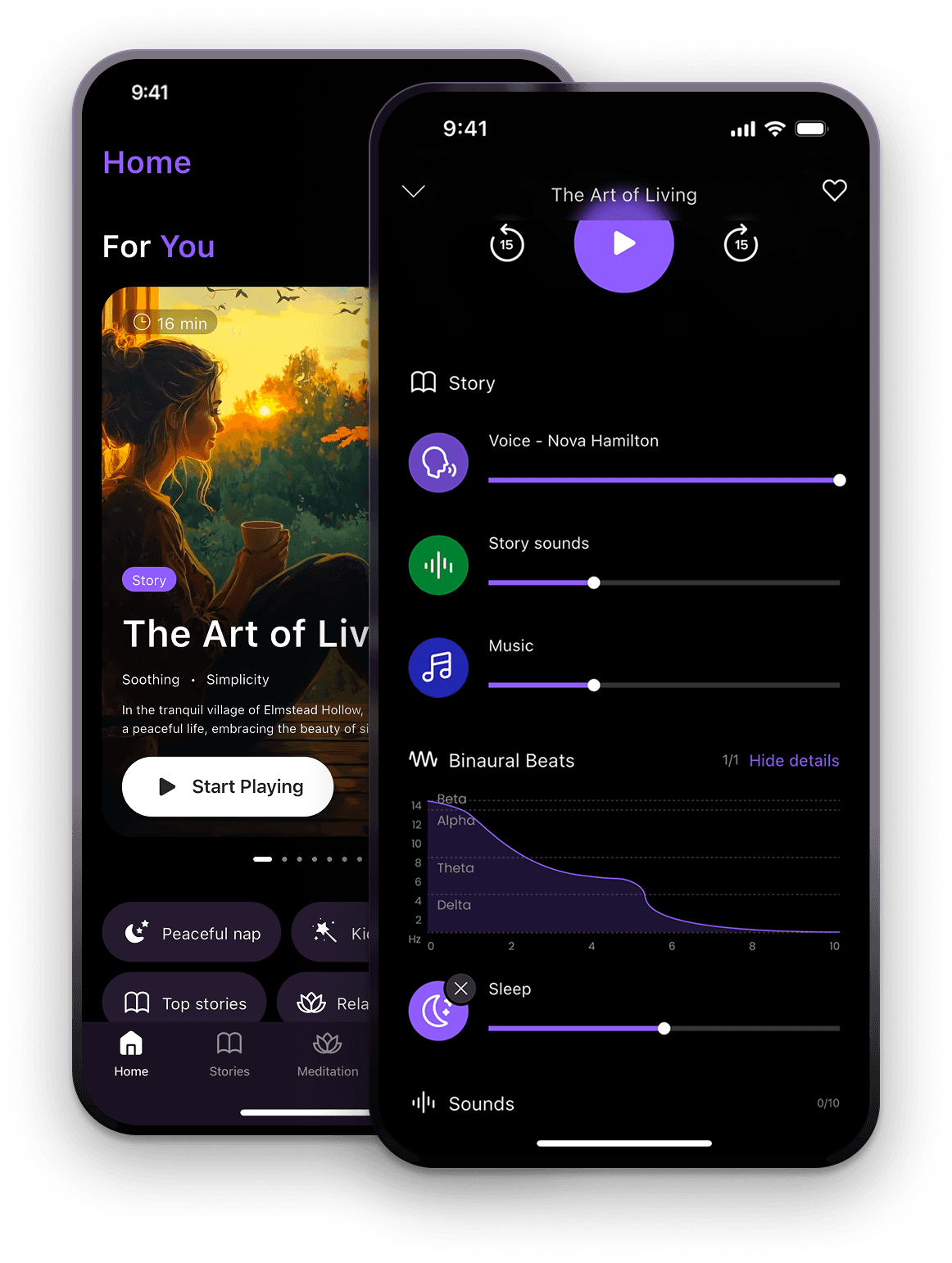
Get full access to stories, meditations, soothing sounds, and binaural beats with our plus+ Subscription.
Start your 7-day free trial now




7-days free
Start your 7-day free trial now
7-days free
Blog / How to Build a Digital Detox Sleep Routine
Clear your screen. Clear your mind.
In a world where our phones are the last thing we see at night and the first thing we touch in the morning, it’s no surprise that our sleep is suffering. Late-night scrolling, binge-watching, and endless notifications are more than just distractions—they’re disruptors of deep, restorative rest.
But there’s a way out. By building a simple digital detox routine, you can retrain your body and mind to wind down naturally, sleep better, and wake up refreshed.
This blog walks you through the science behind screen-related sleep issues and gives step-by-step guidance to create a nighttime routine that finally works.
Let’s start with the science. Digital devices—phones, tablets, TVs—emit blue light, which:
For Anxious Sleepers, Stressed Professionals, and Students, that blue glow often means more overthinking, more mental fatigue, and less actual rest.
And for Late-Night Gamers, Scrollers, or even Curious Explorers catching up on rabbit holes before bed—it adds up to disrupted REM cycles and lower sleep quality.
Screen time often becomes part of our coping mechanisms. It’s how we decompress, escape, or distract ourselves after a long day. The problem is, digital relaxation is passive, and doesn’t help your body shift into “rest mode.”
Psychologists suggest that real recovery—especially at night—comes from intentional winding down that signals to your brain: it’s safe to sleep.
Whether you’re a busy parent trying to protect your only hour of peace, or a wellness enthusiast optimizing every hour of your day—this step-by-step guide can help.
Pick a time each night to power down all major screens. Stick to it like you would a bedtime for your kids or a work meeting. Let your body begin the transition to rest.
🕙 Example: If you sleep at 11:00 PM, turn off screens by 9:45 PM.
Designate your bedroom—or at least your bed—as a no-screen zone. Replace screens with sleep-positive alternatives like:
Use that time intentionally. Here are a few sleep-friendly activities:
These activities send physical and psychological cues to your brain that it’s time to unwind.
Not all technology is bad—but it should support rest, not stimulate your brain.
In-app tools like:
These guided sessions are designed to help you bridge the transition from digital overload to quiet sleep readiness—perfect for the Mental Health Seeker or Sleep Optimizer.
Pair your digital detox with habits you already do at night (like brushing your teeth or putting on pajamas). This makes it easier to remember and harder to skip.
🧠 Example: Every time you plug in your phone to charge, place it outside the bedroom. Then start a 5-minute meditation or light a calming candle.
With consistency, a digital detox sleep routine can lead to:
Your bedtime isn’t just the end of the day—it’s the beginning of tomorrow. Let it be screen-free and intentional.
You don’t have to cut out screens completely. But you can take back control of your nights.
By giving your brain the space to disconnect, you give your body permission to truly rest. And when you sleep better, you show up better—for your family, your goals, and yourself.
Share article